
Workshop 4: Interest and Science Education
What is Interest?
Interest as a multidimensional psychological construct that incorporates elements of engagement, attention, motivation and curiosity. Given this, interest can be difficult to define or measure in a research sense but can (and should!) be fostered in learning environments. Teachers know it when they see it and the positive impact of interest-driven pedagogies can be drastic.
In your interdisciplinary teams, discuss what behaviours or traits you might observe when learners are interested in a science lesson?

Why is interest important?
Internationally it has been recognised that as a student progresses into adolescence, they become less interested in science. There are a multitude of reasons for this decline and many are out of teachers’ hands. However, teachers can influence the content of their science lessons and move away from transmissive teaching styles to interest driven pedagogies.
Indeed, science teaching is the biggest determinant of student interest. Moreover, this interest has been linked to academic achievement and future subject choices. As such, the ability to develop a talent pool in the sciences truly falls into the hands of science teachers who are often under resourced and time stricken.
Components of interest
To be able to change or modify teaching, you have to understand some of the components of interest. In modern literature, interest is broken into Situational Interest (SI) and Personal Interest (PI) (Note that PI is also sometimes referred to as Individual Interest).
SI is a temporary construct that arises due to environmental or contextual factors. For example, an engaging text, visual or new piece of technology may trigger SI among students. Therefore, SI can be nurtured in class by the teacher.
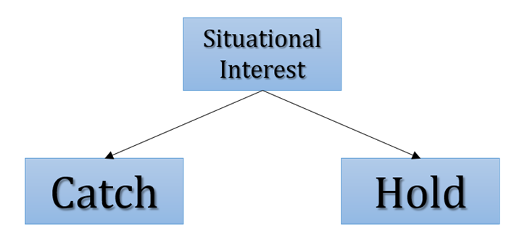
Figure 1: Situational interest has two components ‘catch’ and ‘hold’ (Mitchell 1993).
SI can be further broken into two more elements, Triggered SI and Maintained SI. This is sometimes referred to as the ‘catch and hold’ of interest (Figure 1). Take for example a shooting star. Once observed, it will trigger or catch your SI. However, due to the stars fleeting nature it is unlikely that it will maintain or hold your interest. The same applies to the classroom and teachers should avoid gimmicks or strategies without depth. Of course, trial and error through experimenting with students can reveal what works best for each group.
The triggered aspect (catch) of SI can usually be observed through behavioural changes among students, especially if they report on their excitement both vocally (oohh’s and aahh’s!) and physically (sitting up straight or trying to see the board or demonstration). This stage is characterised by attention, but it needs to be maintained (held) to be of any educational value. Maintained SI is where a student begins to forge a more meaningful connection with the lesson content. As such, content needs to be relevant and have value.
Teachers should strive to continually impact SI with a variety-based approach. The wider literature claims that if teachers can continually engage a students’ SI, they will eventually develop a Personal Interest (PI) in a subject area. PI is a stable construct that is enduring over time. Think of those students who enjoy science all the time even when the quality or type of instruction varies. PI can also be further broken up into two separate constructs. These include less developed personal interest and well-developed personal interest. The difference between the two is essentially the scale and level of interest held by the student. These latter phases are characterised by a positive feeling towards a subject area and a high level of content knowledge. Furthermore, students who are personally interested will persist with difficult content and can be resourceful in tackling problems.
Combining all aspects of interest, Hidi and Renninger (2006) put forward the four-phase model of interest development which can be observed in Figure 2 below. It demonstrates how interest can run on a continuum.
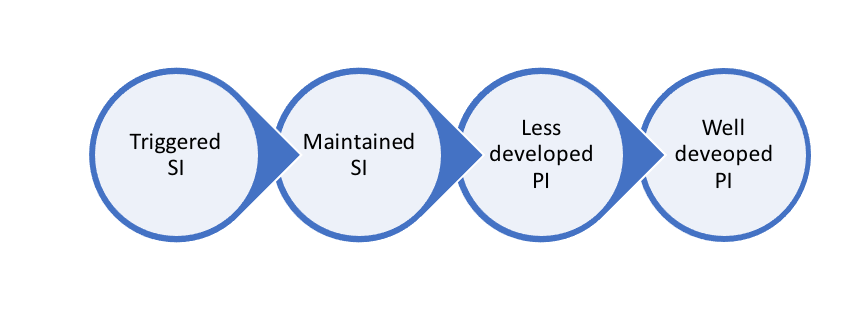
Figure 2: Hidi and Renninger’s (2006) four-phase model of interest development.
How to make science teaching more interesting
From a teacher perspective, SI is a malleable construct and there are a wide range of strategies available to make science instruction more interesting. The following will briefly outline a number of techniques. Bear in mind that the list is not exhaustive and many of the techniques can be improved through the use of group work. Social interaction in class is an excellent way of maintaining interest throughout the duration of a lesson.

Figure 3: An Ehrenstein figure with radiating lines around a ‘circle’.
Discrepant Events
People have one of two reactions to discrepant events (things that do not make sense!). Either they will become interested or confused. Confusion can be turned into interest if the teacher makes sure that any discrepancies are fully explored and resolved.
A simple approach in class is to use intriguing visuals. Take for example the Ehrenstein illusion in Figure 3. The image consists of radiating lines; however, it seems to make the image of a circle inside the lines. An image like this can be used to trigger a student’s interest in light, drawing and the eye.
Experiments are also an excellent way of promoting discrepant events, especially if the result can seem magical or non-sensical. A simple experiment that teachers can perform in class is the Gravity Hand Trick. Get one of the students to place a coin in one of their hand stand out of the sight of the teacher. They then raise their hand holding the coin into the air for 60 seconds. Over this time, the blood will rush out of their hand. They are then asked to put their hands together and the teacher picks out the hand that held the coin. The method behind this experiment or trick is due to the difference between the student’s hands. The hand that was raised in the air will be paler and less vascular than the one held by their side. Note that this experiment does not work as well with students who have darker skin tones. Given this, it is a good experiment if you want to talk about pigmentation and cardiovascular issues. See Figure 4 below and use the following link to get more information.
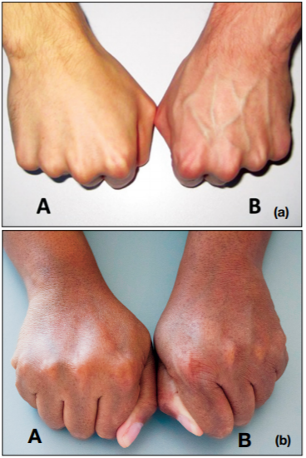
Figure 4: An image demonstrating the difference between different skin tones of students who have both conducted the gravity hand trick.
Relevance
Relevance in teaching can take many forms. For example, in science you may use everyday materials to conduct experiments. This can show students that science is everywhere. A second relevance approach is to use culturally important materials to the students, things that relate to their personal lives and contexts. Finally, a teacher can also make science more relatable by giving students ownership of experiments. For example, in ecology, get students to make and assess their own quadrat (square that is placed on the ground and students take account of all plants and animals within) from their gardens or local parks. With this, the student makes a personal connection with the topic. An example of a strategy in which students make their own science videos is presented here.
Genetics is a good topic to use relevance to build interest. Usually students are asked to roll their tongues, however, they can look at other traits such as the ‘hitchhikers’ thumb’ in Figure 5. This will make science personally relevant and trigger interest among students.
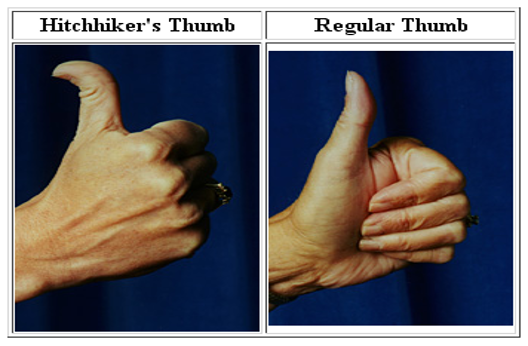
Figure 5: Image with a hitchhiker’s thumb and a straight or ‘regular’ thumb.
Questions and Puzzles
Questioning is one of the most basic ways in which a teacher can engage a student. The type and form of question can directly influence a student’s interest. If they can comprehend the question and can offer an answer, then they are more likely to pay attention and engage. In line with the previous sections, questions that are relevant to the student in some way are more engaging, particularly if they can use their prior knowledge. Examples of good questions include
- What is the percentage of water in a watermelon?
- What is the largest land predator on the planet?
These questions are effective because every learner can offer up an answer no matter what their level of knowledge. An example of a bad question is
- Can you define the amp?
This question is highly specific and will immediately disengage those who have little knowledge of the topic area.

Puzzles can also be used for longer term engagement. Take for example the puzzle in Figure 6. Students are given the image on the left. It is an L shape. They are then asked to divide the shape into four sections that are all the same shape and the same size. However, the question can be slightly changed and given a theme. Pretend the shape on the left is a field and the owner is dividing it up for their four children. They want each child to get a field that is the same shape and size to avoid any disagreements. Students can be encouraged to work in groups and use rulers to measure their shape and break it up. The answer to the question is on the right side of Figure 6. There are many other strategies that can be found online. Think about your own context and do some research into inclusive interest-based pedagogies that would work for both teachers and students.
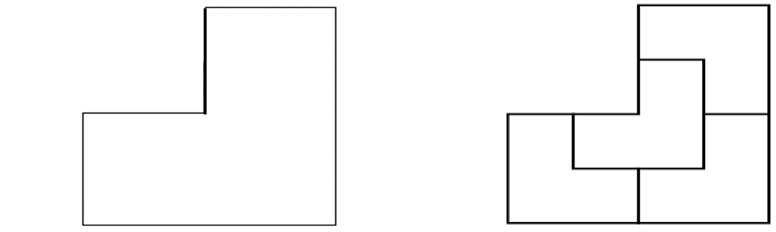
Figure 6: The L shape on the left is first presented to students when setting out the question. The image on the right is the correct answer.
Measuring interest
If you are interested in assessing student interest or changes in interest over time, there is a wealth of research literature examining both qualitative and quantitative methodologies. If you are new to research and measuring psychological constructs, a qualitative approach with stakeholder interviews, observations, reflective journals and short questionnaires (exit cards) may be the best approach. Most likely, you will not produce publishable data, but you may gain key insights into teaching and interest that will allow you to take the next steps. Qualitative methods are especially effective if you are not sure what will happen or what the impact is going to be in a given lesson. For the more experienced researchers or researcher teachers, a quantitative approach can work well when you know what you want to measure and how it can be measured.