
Workshop 2: Language and Science Education – Part 1
Next to the differences in science knowledge, teachers often name differences in students’ linguistic competences as an obstacle for teaching and learning science.
Discuss in your team: what language(s) do students in your science classes speak? Don`t forget the language of science 🙂 Here you can find more information.
I. Making science students teachers sensitive for linguistic heterogeneous classes
Starting with the paper in Workshop 1 the question is: How to make my student teachers sensitive to language differences in their science classes?
Sensitization
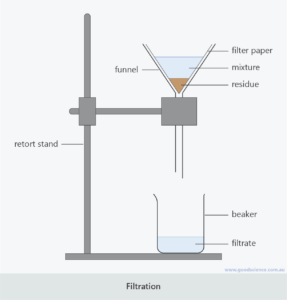
The first method we use is starting the seminar in English and also asking student teachers to talk in English. Usually, we introduce one simple experiment (e.g. filtration of sand and water). We present the experiment and explain/talk what we are doing. Finally, students need to write a lab report on their own. In the next step, they need to compare it with a peer and finally with another three peers, following the method “1-2-4-all”. The goal is not to write and have a “perfect” lab report but more to reflect on how they felt while doing such an activity. In the last paper in workshop 1, you can find some questions to guide the reflection.
A second method is the use of role-play. Student teachers play the role of students in a mock science class and each of them plays the role of the student described on a card they get at the beginning of the role-play. Depending on the number of the student teachers in the course, the number of roles will be different: about 70% of the pretend students are “normal students” (somebody who does not cause any problem in the class, is not one of the best but also not the worst considering knowledge), 1-2 high achievers, 1 student with language problems (e.g. refugee), one student from a lower social background, one to two students with special needs (e.g. one is sitting in the teacher’s chair with wheels or one student has earphones). One student is usually autistic.
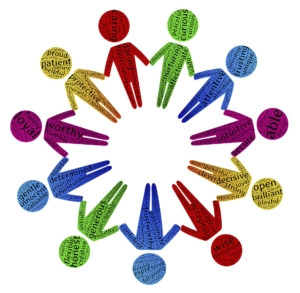

The student teachers take on the role of the class and they need to conduct an experiment. This differs, depending on the room: sometimes we are in the lab and perform an experiment, but sometimes we are in our seminar room. In the seminar room, we can not experiment, but here the experiment is called “which skittle colour is most represented in the bag?”
The questions for the reflective activity can also be used here.
II. Making science students teachers diagnose in linguistic heterogeneous classes
Next step is teaching student teachers about conducting diagnostics in science classes.
We do this in two steps.
- First we give a short presentation on performing diagnostics which is based on the following paper. To inform student teachers about different tools for performing diagnostics, we use the following tool. This is something that our student teachers read at home and so prepare for the class. The presentation can be recorded and uploaded or different free videos (e.g. from youtube or different platforms).
- In the second step, which is in the class, student teachers develop diagnostic instrument for one topic from science lessons. For this, they use their knowledge from the preparation and the Prezi Tool. Student teachers usually work in groups of 3 and use Google docs which is created by the lecturer. They usually do this during the class and after about 20 minutes, the lecturer enters the google docs and comments on their work. This also works very well online.
Discuss in your interdisciplinary team: How can those instruments be adapted to your language and country?
(if you want to use the Prezi tool and adapt it, please send Silvija an email. For adaptation, you need to have Prezi account).